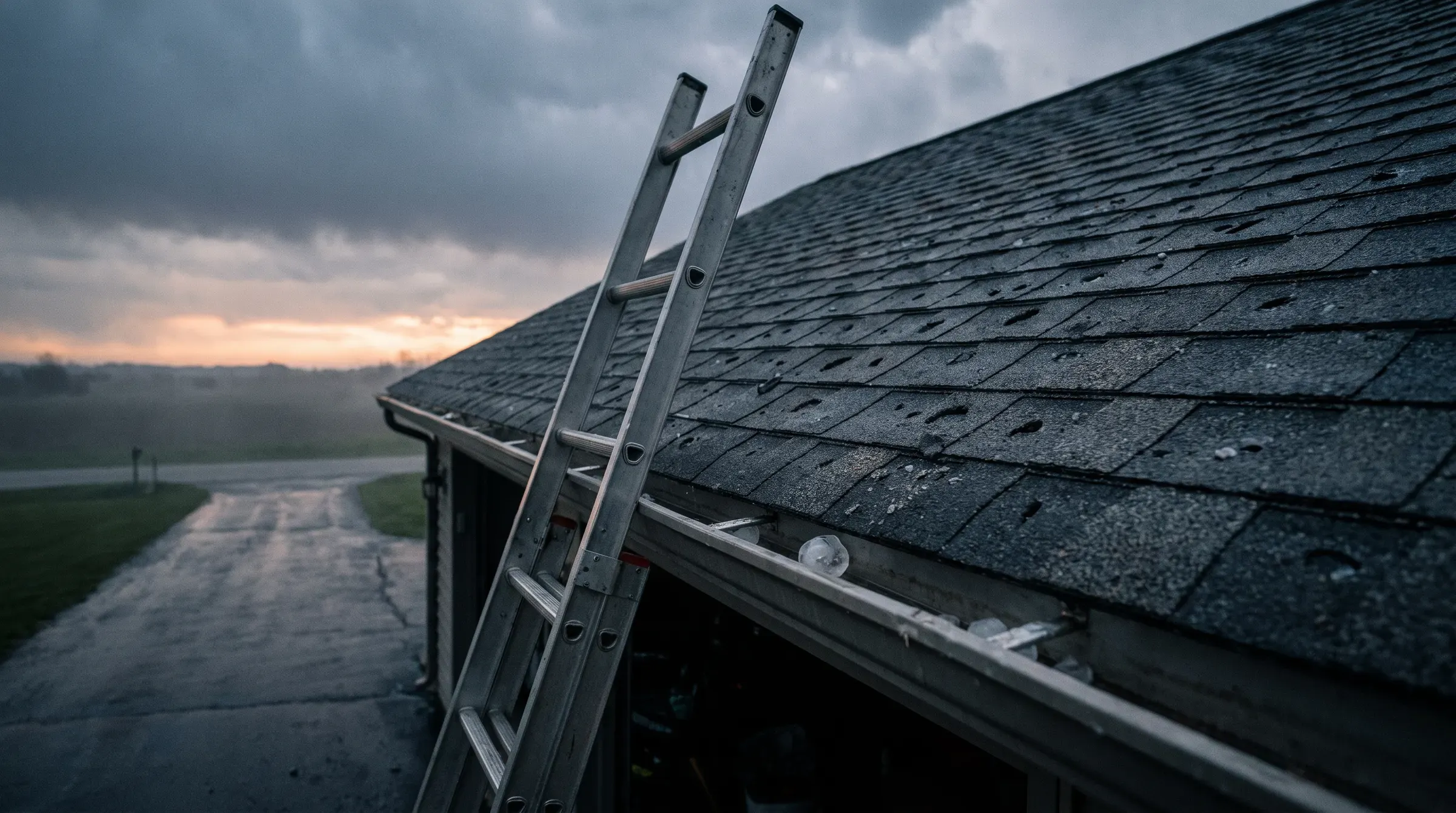
Knock the doors that actually got hit.
Verified address-level hail data for storm-restoration contractors. Post-storm leads in hours instead of days, claim documentation adjusters can't wave off, and CRM integration that puts you first instead of sixth.
Storm restoration runs on fuzzy data.
Storm paths bleed across counties. The lead lists you can buy are sold five times over. And carriers are tightening every year — "show me the radar evidence" is now a normal first question from the adjuster.
From storm clearance to signed contract — faster.
Same intelligence layer, four entry points across the canvass-to-close cycle. Use one or all four — every signal is available via the operator console, REST API, webhook, or CSV export.
Post-storm leads (roadmap)
Automatic storm-driven lead lists — every address that took hail ≥ your threshold, ranked by size, confidence, and service-area boundary — are on the roadmap. Today, import your address list (CSV) and filter it to the addresses that took verified hail.
Route planning
Cluster verified addresses into efficient canvass routes. Skip the large share of a county that didn't actually get hit; concentrate crews where damage is real.
Claim documentation
Pull a one-page hail event report for any address — timestamp, estimated size, radar evidence. Hand it to the adjuster, attach it to the supplement, settle faster.
Speed-to-door
Webhook your CRM the moment a storm clears, impacted addresses attached, so your team works its own homeowner list before anyone else knocks. You're first, not sixth.
A 6,400-address service area, focused down to 142.
A regional roofing contractor covers the DFW metro with a 6,400-address residential database. After a 1.75″ hail event passes the north suburbs, Hail Sentinel returns 142 verified hits inside the service area — sized, timestamped, and ranked by confidence.
Numbers below are illustrative based on industry conversion benchmarks. Actual contractor results vary with brand strength, sales-team capacity, and storm severity.
Plugs into the CRM your sales team already uses.
Today, canvass crews work from a CSV export, and your service-area alerts can fire to any endpoint via signed webhooks. Direct lead push into JobNimbus, AccuLynx, and the other major CRMs is on the roadmap.
See what one storm could look like.
Workspaces open by invitation. Tell us your market and crew count below and we'll reply with an invite or an honest timeline — then walk a real storm in your service area with you: the data, the lead list format, and the adjuster handoff.
Request an invite.
Workspaces open in small batches. Tell us about your operation and we’ll reply from a human — with an invite, or an honest timeline.
Prefer email? business@hailsentinel.com