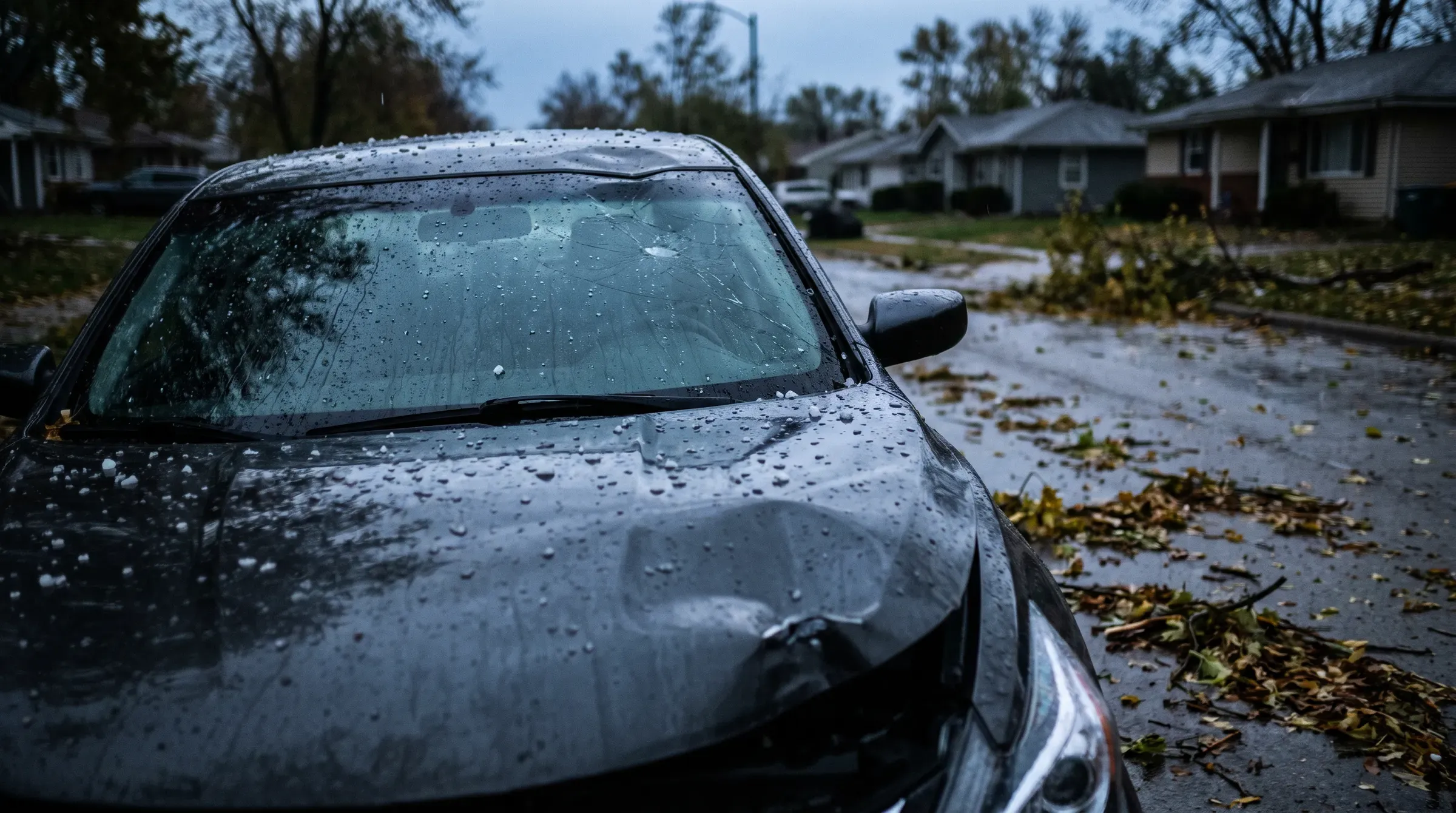
Stop guessing who got hit.
Address-level radar-verified hail data for claims triage, fraud detection, and underwriting. From CAT triage in hours instead of days to objective evidence on every disputed claim.
Insurers run on data that hail doesn't respect.
Hail moves at sub-county scale. Most carriers triage on county-level outlooks, then spend days reconciling claims against a record that was never granular enough to begin with.
Address-level hail data, four ways.
Same intelligence layer, four entry points across the claims lifecycle. Use one or all four — every signal is available via API, webhook, or the operator console.
Claims triage
Within minutes of a storm, see every monitored address that took hail ≥ a threshold. Route severe-damage claims to senior adjusters; fast-path low-severity. Adjuster utilization improves; CAT cycle time drops.
Fraud detection
Cross-reference reported damage timestamps and sizes against radar-verified hail at the claimed address. Flag claims that don't match the record for second review. Objective evidence instead of "deny and litigate."
Underwriting & risk scoring
Address-level hail history back to 2020 (backfill ongoing) powers risk models that go beyond ZIP and county. Price exposure correctly; identify portfolios concentrated in high-frequency cells.
CAT response
Address-level impact for every insured location you monitor: predicted size as the storm approaches, verified size once it clears. Pre-stage adjusters, contact policyholders proactively, route claims to the right teams before the call volume hits.
A 400-claim spring storm, triaged before lunch.
A regional carrier covering a four-state Midwest book gets hit by a high-CAPE supercell. Within 2 hours of the last cell exiting the territory, every claim is matched against a radar-verified hail record at the claimed address.
Numbers below are illustrative for a hypothetical 400-claim event. Actual ROI varies with book composition, carrier reserve practices, and event severity.
Drops into your stack — not a rip-and-replace.
Connect at whatever layer makes sense. Most carriers start with bulk address sync + CAT webhook, then extend into claims-platform enrichment as their adjusters get used to the data.
See it on your book.
Workspaces open by invitation. Tell us your geography and portfolio shape below and we'll reply with an invite or an honest timeline — plus the packet your security team will ask for.
Request an invite.
Workspaces open in small batches. Tell us about your operation and we’ll reply from a human — with an invite, or an honest timeline.
Prefer email? business@hailsentinel.com